For example, the illegal wildlife trade frequently uses complex smuggling routes to transport endangered species from one continent to another, often involving multiple transit points to confuse authorities. Understanding the dynamics of these hidden economies is crucial because they can have far-reaching implications on legal markets, public policy, and societal well-being. Explore the complexities of black market economics, including its drivers, types, impacts, and government responses. It’s impossible to accurately measure the size of the black market in the U.S., but according to estimates, it is as much as 12% of the U.S. gross domestic product (GDP). Yet in the face of all the evidence, at least three grand illusions persist in the way we — the public and the politicians in whom we place our trust — address global illicit trade. The under economy in Italy accounts for 17.4% of the GDP, which is a major threat and obstacle to the progress of actually economy of the country.
What Are Black Markets And How Do They Operate?
Within the parameters of entirely legal market structures, illegal activities can take place undetected or unpunished. Distribution and exchange methods are often informal and rely heavily on established networks. Goods might be smuggled across borders to avoid tariffs or prohibitions, or they may be diverted from legitimate supply chains. Due to the absence of formal contracts or legal enforcement mechanisms, participants often depend on personal trust or informal relationships to facilitate transactions. This reliance on trust is a substitute for the legal protections available in regulated markets, where disputes can be resolved through the court system.
What Is Considered “Underground”?
As another example, consider a property buyer who purchases land valued at $200,000. If the buyer only reports $50,000 on the books and pays $150,000 under the table, then there is a black money transaction worth $150,000. The sellers in both examples have earned money from legal sources but evaded taxes. No one has greater cause to feel hard done by than Britain’s six million smokers, who are now required to pay between £12 and £18 for a pack of cigarettes if they want to stay on the right side of the law. Since it is UK government policy to make tobacco unaffordable, a large and growing number of them have decided to starve the beast and buy packs of cigarettes for £5 on the black market instead.
Link Between Trade-Related Black Market And Money Laundering
The legal complexities and ambiguities of the global oil and gas trade often create an opening for illegal activity. Another form of tax evasion involves offshore accounts used to hide income from tax authorities. While some offshore banking is legal, failing to report foreign assets can lead to severe consequences. Under the Foreign Account Tax Compliance Act (FATCA), U.S. taxpayers with foreign financial assets exceeding $50,000 must report them to the IRS.
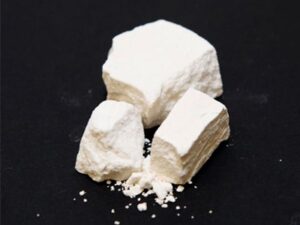
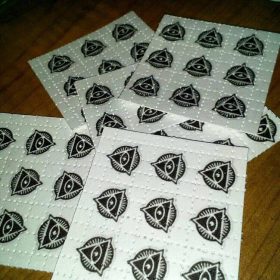
This loss of revenue can have a detrimental effect on government budgets, reducing funds available for public services and infrastructure development. According to PMI Global, this revenue loss can amount to significant sums of money globally. Illicit drug trade involves the production, distribution, and sale of illegal substances. This black market activity includes drugs such as cocaine, heroin, methamphetamine, and synthetic drugs.
How ICE Enforces Immigration Laws
Examples of trade-related black market activities include the sale of counterfeit goods, illicit drugs, weapons trafficking, human trafficking, and wildlife trafficking (Wikipedia). The sale of illegal drugs, weapons, human trafficking, and the illegal wildlife trade is common in black markets. They can negatively impact the economy because there is no reporting or tax collection. But, they can create jobs for people who can’t find employment in traditional markets and provide healthcare to people who can’t access it.
Drugs are an obvious example of this; there has long been a demand for these products despite the danger of some drugs and the laws against using them. But thinking about international illicit trade as just another manifestation of criminal behavior misses a larger, more consequential point. Global criminal activities are transforming the international system, upending the rules, creating new players, and reconfiguring power in international politics and economics. The United States attacked Iraq because it feared that Saddam Hussein had acquired weapons of mass destruction. Q. Khan, a Pakistani engineer, was profiting by selling nuclear bomb-making technology to whoever could pay for it. The massive transfer of goods and equipment once under the exclusive control of national armies into private hands released into the market products ranging from rocket launchers to SCUD missiles and nuclear designs and machinery.
- The black economy consists of many decentralized clandestine markets—the black markets.
- Taxes are a primary source of funding for public services such as healthcare, education, and infrastructure.
- Subsequent studies refuted the idea that marijuana was linked to crime while declaring that the drug was neither addictive nor a gateway to other drugs.
- The black market, a clandestine realm teeming with covert activities, exerts a profound and far-reaching influence on both our society and economy.
- Striking a balance between satisfying immediate requirements and upholding ethical standards can be a formidable challenge.
The sale of tobacco and alcohol is fairly heavily regulated, while there is little regulation governing the exchange of a second hand car between two individuals. Quantitative estimates of its aggregate role in the Soviet economy thus necessarily remain speculative. This situation holds especially true in nations where the withheld tax revenues would have been siphoned off by corrupt government officials. One example is counterfeit pharmaceuticals, which the World Health Organization (WHO) estimates account for 10% of medicines in low- and middle-income countries. These fake drugs may contain incorrect dosages or harmful substances, posing serious health risks.
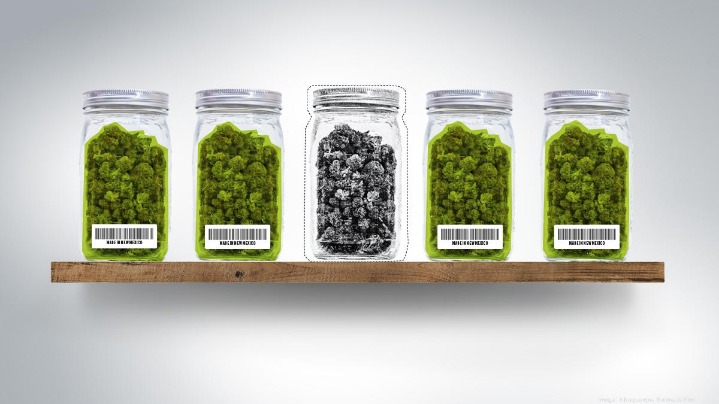
US Cannabis Shoppers Face A Market Flush With Illegal Weed
Networks of stateless traders in illicit goods are changing the world as much as terrorists are — probably more. If you have ever worked “under the table” or “off the books” and not reported the income from it, you’ve participated in the shadow economy. The unreported economy seeks to evade the institutionally established fiscal rules as codified in the tax code. Under-the-table employment and untaxed private transactions that are otherwise legal fall into this category. Consider Mozambique, where immense offshore natural gas reserves have been discovered.
The Effects Of A Black Market On Supply And Demand
In countries including India and Nepal, the price of fuel is set by the government, and it is illegal to sell the fuel at a higher price. During the petrol crisis in Nepal, black marketing in fuel became common, especially during mass petrol shortage. Petrol pump operators were alleged to hoard the fuel and sell it to black marketeers. Black marketing in vehicle/cooking fuel became widespread during the 2015 Nepal blockade; even after it was eased and petrol imports resumed, people were not getting the fuel as intended and resorted to the black market. An example of an illegal or black market would be the human trafficking market that engages in the capture of people throughout the world and their sale into various areas, such as forced labor and prostitution.
The Key To Transparency: Demystifying Anti-Money Laundering Regulations
In Maine, the congressional delegation last summer asked the Justice Department for help in combatting illegal cannabis producers, who outnumber the state’s licensed operations and are believed to be funded in part by Chinese investors. In situations of financial instability and inflation, citizens may substitute a foreign currency for the local currency. The U.S. dollar is viewed as a relatively stable and safe currency and is often used abroad as a second currency. In other countries, such as Nicaragua, where legal prostitution is regulated, hotels may require both parties to identify themselves, to prevent child prostitution. Browse US Legal Forms’ largest database of 85k state and industry-specific legal forms. With strong demand for portfolio tracking solutions and social trading capabilities, Stratopian enables many t…
- Quality and validity of the data it provides justify its higher cost over other marketplaces.
- These illicit transactions undermine government revenues, distort market competition, and create risks for consumers.
- Jeremy Bowman has been a contributing Motley Fool stock market analyst, covering technology, consumer goods, and macroeconomic trends since 2011.
- Whatever you buy and sell is probably being sold or bought cheaply on the black market.
- The IRS estimated that $496 billion—in under-reported, underpaid, and non-filed taxes—in taxes were lost on average between 2014 and 2016 due to unreported wages (the latest available information).
In 2007, Chinese officials passed law-based regulations on organ transplantation that led to “arduous reform,” according to Huang, resulting in “remarkable achievements.” Delmonico said the Chinese have made positive strides to drastically reduce illicit sales. By 2005, Delmonico and colleagues discovered that trafficking accounted for approximately 10 percent of all annual kidney, liver and heart transplants. Black market transactions are still common today in the Indian subcontinent, Africa and the Middle East, Delmonico noted, aided by physicians from other countries who may travel to Egypt or elsewhere if deals are negotiated.
Understanding Black Market Economics: Drivers, Types, And Impacts
In regions where legitimate employment opportunities are scarce, individuals may turn to illicit trade as a means of survival. This is particularly evident in developing countries, where informal economies often constitute a significant portion of overall economic activity. For example, in some African nations, the trade of counterfeit goods and smuggled commodities provides livelihoods for many who are otherwise marginalized by the formal economy. It is trade that breaks the rules — the laws, regulations, licenses, taxes, embargos, and all the procedures that nations employ to organize commerce, protect their citizens, raise revenues, and enforce moral codes. It includes purchases and sales that are strictly illegal everywhere and others that may be illegal in some countries and accepted in others. Illicit trade is highly disruptive, of course, to legitimate businesses — except when it isn’t.
Introduction To Trade-Related Black Market
It is estimated that the illegal oil market is worth approximately US$133 billion annually, with around US$1.7 trillion in oil production globally each year. This illicit trade enables groups such as ISIS, Mexican drug cartels, Italian Mafia, Eastern European criminal organizations, Libyan militias, and Nigerian rebels to finance their activities, perpetuating instability and posing a threat to global security. The trade-related black market encompasses various illegal activities involving the trafficking of goods and services, which can have significant economic and social impacts. In this section, we will provide an introduction to trade-related black market activities and explore their overall impact. There is a big demand and a large market for these goods, despite strong laws designed to punish those who sell fake goods. The sale of counterfeit goods reduces the profits made by legitimate manufacturers and also undermines confidence in the market as a whole.
Since then it expanded to include Illegal weapons, submachine guns, assault rifles, explosives, drugs, animals apparently, possibly even down to gasoline and other types of fuel. Whatever you buy and sell is probably being sold or bought cheaply on the black market. Worldwide, there are dangerous and lesser-known black markets operating behind the shadows. Many are in places no one would have ever imagined, like the internet (dark web).