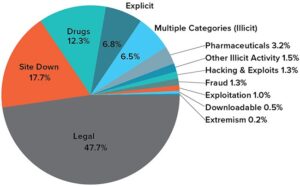
NDEWS uses traditional surveillance methods like drug-related emergency calls, and newer tools like wastewater analysis and tracking of social media trends. Moreover, the rapid adoption of automation technologies, such as robots, automated dispensing cabinets, and packaging systems, is driving the segment’s growth. For instance, in March 2022, Walgreens Boots Alliance reported opening its robotic micro-fulfillment centers in its 22 facilities across the United States, to fill customers’ prescriptions.

Competition Among Small Molecule Drugs And Biological
Improved healthcare infrastructure and increasing awareness about eye health are boosting demand for effective treatments. Additionally, advancements in pharmaceutical technology and expanding access to healthcare in emerging countries are fueling market growth, making Asia-Pacific a key region for ophthalmic drug development and sales. The Japan prescription drugs market is gaining momentum, supported by a rapidly aging population, a high incidence of chronic illnesses, and widespread access to universal healthcare. Japan’s advanced pharmaceutical innovation ecosystem and emphasis on personalized medicine are contributing to the adoption of targeted therapies, especially in oncology and neurology. Technological integration in healthcare delivery and increased digital prescription usage are further stimulating market growth in both inpatient and outpatient settings. With over 10,000 generic drugs approved by the FDA, generics have proven their value by accounting for more than 90% of dispensed prescriptions in the U.S. while representing only 18% of overall spending.
That number could rise to 30 million in 2035, or about 20% to 25% of the obese population, a potential market of $80 billion. Morgan Stanley Research now estimates the global market for obesity drugs could reach $150 billion at its peak in 2035, an increase from a previous forecast of $105 billion. Quantities of the drug were then smuggled throughout the US.55 The international drug trade created political ties between the involved countries, encouraging the governments of the countries involved to collaborate and instate common policies to eradicate drug cartels. Cuba stopped being a center for transport of cocaine following the Cuban Revolution and the establishment of Fidel Castro’s communist government in 1959.
Market Size & Forecast
About 40% of the US’s generic needs, more than 50% of Africa’s generic needs, and about 25% of the UK’s total drug supply come from India. India is also a major provider of DPT, BCG, and measles vaccinations, and it supplies around 60% of the world’s vaccine orders. India supplies 70% of the vaccines used by the WHO (according to the essential immunization schedule). Whether you need deeper insights into a particular region, industry segment, competitor analysis, or data cut, our research team can tailor the report accordingly.
Government And Public Health
Additionally, it prompts pharmaceutical companies to accelerate the development of novel therapies and improve drug accessibility. The growing demand also supports collaboration, clinical trials, and approvals, further propelling market growth and innovation in ophthalmic solutions. The Asia-Pacific prescription drugs market is poised to grow at the fastest CAGR of 7.9% from 2025 to 2032, propelled by rising healthcare investments, population growth, and increasing prevalence of chronic conditions in countries such as China, India, and Japan.
Europe Pharmaceutical Market Trends
Treatment aims to alleviate symptoms, slow disease progression, prevent complications, improve lung function, and enhance long-term outcomes. This may involve medication such as bronchodilators, corticosteroids, antibiotics, lifestyle modifications, oxygen therapy, and other interventions tailored to the individual’s needs. As of March 2022, specialty medicines accounted for 55% of net spending, up from 28% in 2011. Harness unparalleled healthcare data, advanced analytics, and cutting-edge technologies with our expertise to accelerate the development and commercialization of innovative medicines, enhancing patient lives. U.S. over the counter (OTC) drugs market was valued at US$ 41.93 billion in 2024 and is projected to hit the market valuation of US$ 69.65 billion by 2033 at a CAGR of 5.8% during the forecast period 2025–2033.
The generic drugs segment is anticipated to grow at the fastest CAGR of 7.4% from 2025 to 2032, driven by patent expirations, increasing demand for cost-effective treatments, and favorable regulatory support. The oncology segment dominated the pharmaceutical market, holding 16.99% of the share in 2024. This is largely due to the increasing incidence of cancer, advancements in personalized medicine, and the development of targeted therapies. Collaborations between pharmaceutical companies and research institutions are accelerating the development of innovative oncology treatments, further driving the growth of this segment.

Generic Drugs Market Research On Size, Share, Trends, Segments, Regions & Competition
Hospital pharmacies dominate the distribution landscape, with retail pharmacies playing a growing role in chronic disease management. The pharmaceutical market in Germany is a key country in Europe’s pharmaceutical market, supported by advanced manufacturing capabilities and significant investments in biopharma research. The market is driven by demand for therapies targeting metabolic disorders, oncology, and cardiovascular diseases. Hospital pharmacies hold a substantial share of the distribution segment, with increasing penetration of retail pharmacies improving patient access to medications. The over-the-counter (OTC) segment emerged as the fastest-growing in the pharmaceutical market, driven by increasing consumer preference for self-medication, improved product accessibility, and rising health awareness.
Pharmacy Type Insights
The biosimilars market will continue to expand as losses of exclusivity occur, with expected launches and uptake forecast to increase overall spending on biosimilars to $20-49 billion in 2027 (Figure 5). A curation of IQVIA’s best thinking on topics and trends driving change, disruption, and progress in the United States healthcare market. Accelerate digital innovation with our data-driven expertise in data science and healthcare, optimizing business processes for smarter decisions. In 2022, specialty product growth outpaced traditional product growth, with a 51% share of total non-discounted spend (Figure 1). In the moving annual total (MAT) to January 2023 (MAT January 2023), specialty spend grew by 11.7% while traditional growth grew 7.3% on an invoice price basis. In addition, compared to some other routes of administration (such as injections or intravenous infusions), taking medications orally is generally less invasive and more comfortable for patients.
How Big Is The Ophthalmic Drugs Market?
The biological product market was smaller than the small moleculemarket based on the number of products and total spending. Therewere 209 biological products on the market in 2017, which increasedto 268 in 2022 (28 percent increase). The prevalence of colds, primarily caused by the rhinovirus, acts as a significant driver for the OTC drugs market. According to the CDC, with the rhinovirus accounting for at least 50% of cold cases, the impact is substantial, leading to approximately 22 million lost school days annually in the U.S., as reported by the CDC. The occurrence of cold is estimated at 1 billion cases each year among Americans, emphasizes the widespread demand for OTC drugs to alleviate symptoms and manage the effects of common colds. In the U.S. market for pharmaceuticals, the transformative clinical outcomes of GLP-1 receptor agonists and GLP-1/GIP dual agonists, have set a new benchmark for obesity treatment.
Hospitals rely on sterile injections for critical care, and five suppliers with established aseptic capacity collectively hold 46% of this subsegment’s generic drugs market share. Companies are responding by redirecting resources toward differentiated complex generics and biosimilars, where first-to-file advantages and limited competition can protect margins. Supply chain resilience and aseptic capacity remain decisive competitive levers, especially in sterile injectables where five firms already command nearly half of revenue.
Therefore, the upper hand of the pure generic drugs segment is predicted to continue during the forecast period. The cost-effectiveness of these drugs and the growing adoption of pure generic drugs in developing countries primarily drive the segment’s growth. In addition, the patent expiration of several blockbuster drugs is anticipated to boost the segment’s growth rate. The quality issues of generic drugs are another significant challenge to the global market growth.
- By making intelligent connections between your needs, our capabilities, and the healthcare ecosystem, we can help you be more agile, accelerate results, and improve patient outcomes.
- However, the number ofspecialty prescriptions decreased from 1.16 billion in2017 to 1.09 billion in 2022, a 6.2 percent decrease.
- By geography, the market is segmented into North America, Europe, Asia-Pacific, Middle East and Africa, and South America.
- We alsoobserved a greater percentage increase in biological products with asingle manufacturer over time, 44 percent, relative to a 19 percentincrease among small molecule drugs.
- Sales are forecast to reach $2.9 billion by 2030—a potential blockbuster for Vertex as well as a safer alternative to opioids for those managing acute pain.
- The term “off label” generally refers to the promotion of a Product Type for uses that are inconsistent with the FDA-approved labeling or PI.
Which Are The Top Global Pharmaceutical Companies?
These investments reflect the commitment of companies to creating life-enhancing innovations. In China, there is a rising emphasis on healthcare, resulting in a raised demand for pharmaceuticals, including traditional Chinese medicine. Also, the govement of China is greatly promoting healthcare reforms, funding in healthcare infrastructure, and simplifying drug approvals to enhance availability and reasonable expenses. With growing disposable income, especially among the middle class, people can afford highly expensive drugs. This platform contains insights related to the latest global, regional and subregional estimates and trends in drug demand and drug supply in the form of global, regional and sub-regional Key Findings that are easy to search. The user can explore the key findings sequentially following a narrative by their topic of choice.
Exploring Telehealth Solutions For Remote Patient Monitoring
Factors such as an aging population, strong healthcare infrastructure, and technological advancements in drug delivery contribute to sustained growth. In addition, increased adoption of telehealth, e-prescriptions, and the growing prevalence of chronic and lifestyle-related conditions further propel the U.S. market. Pharmaceutical companies continue to invest heavily in R&D and regulatory approvals, strengthening the industry’s dominance. TheAsia-Pacific region is seeing substantial growth in the generic drugs marketdue to rising healthcare needs, a large patient population, and increasinggovernment support for affordable medicines. India and China are becomingprominent players in the global generic drug manufacturing sector, benefittinggreatly from economies of scale and improved healthcare infrastructure.