Hence, the deep web literally comprises all those parts of the internet that are not indexed by search engines. The kinds of content present in this region include private databases, medical records, academic journals, and other sensitive information that requires special permission to access. For example, every academic institution holds valuable resources within its online libraries that are important to its students and researchers who have legitimate access but not for public consumption.
#2 Extra Protection
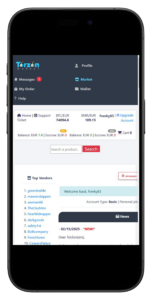
The Dark Web is designed to provide privacy and anonymity to its users by encrypting and anonymizing the traffic by using darknets. However, these features can be used for both legitimate and malicious purposes. This is the primary reason why the US NRL developed the TOR technology used by most Dark Web visitors. Cybercriminals take advantage of the privacy and anonymity that the Dark Web provides for a variety of purposes. Dark Web marketplaces are used to buy and sell illegal goods and services.
For example, to access the popular dark web forum CryptBB, you must know the exact onion link; conducting a web search for the forum will not turn up anything useful. Many dark web sites deploy tools that prevent bots and web crawlers from accessing the site. Some well-known underground sources can be easier to find because there are dedicated sites that share links and maintain regular status updates. But in many cases, finding the exact URLs through manual search methods can be next to impossible. The Gray Web, Deep Web, and Dark Web are all valuable sources of threat intelligence, but many organizations limit their information-gathering efforts to the Surface Web.
What Is The Primary Difference Between The Deep Web And The Dark Web?
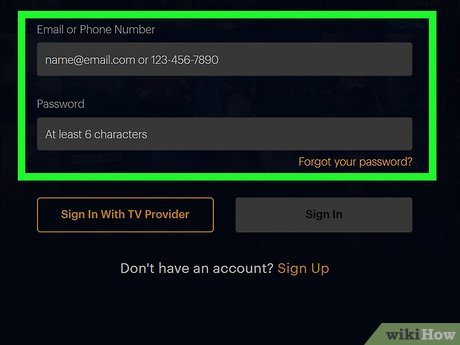
But while millions of people spend their time surfing through Google and other search engines, there are deeper and darker parts of the web a lot of people don’t know exist. Our advanced cybersecurity tools—DatalaiQ, Fense, ThreatIDR, and ThreatMDR—provide a robust defense against the cyber threats detailed in this discussion. We understand the intricacies of deep web security and dark web risks, and we’ve tailored our technologies to shield you effectively. You use the Deep Web every time you check your bank account or log into social media — all mundane but necessary uses that require a username and password. Comparatively, the Deep Web also prioritizes security but in a more accessible way. Regular internet users tap into this sector daily, shielded by standard security measures like SSL certificates and end-to-end encryption.
About IProVPN
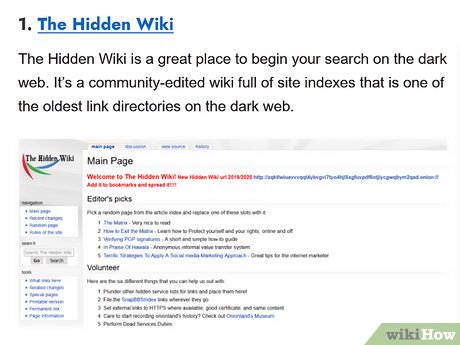
To discover content on the web, search engines use web crawlers that follow hyperlinks through known protocol virtual port numbers. This technique is ideal for discovering content on the surface web but is often ineffective at finding deep web content. According to a report published in 2013, the Tor project received over $1.8 million that year from two non-profit organizations that are funded directly by the U.S. federal government. Yet, a large part of the darknets manage to stay within the legal and/or ethical boundaries for the most part, and is certainly worth checking out.
Dark Web Vs Deep Web: Separating Hyperbole From Reality
The dark web is home to the internet’s hidden sites, services, and products — some innocent, others downright dangerous. Read on to learn the pros and cons of the dark web, how to access it, and get tips for staying safe. Then, install Norton 360 Deluxe to get AI-powered scam detection to help secure your browsing against online threats. H25.io is a premium directory in the Tor network, offering access to a diverse and meticulously curated list of onion sites. Our mission is to simplify navigation in the complex and evolving world of the darknet. Here, you’ll find links to various resources, including educational archives, private forums, anonymous services, and more.
- In 2021, some of the most popular marketplaces included Dark0de, Torrez, and OpenRoad.
- The anonymity offered by Tor allows both hosts and users to cloak their identities.
- It’s not easy to remove personal data from the Deep Web or Dark Web.
- For instance, banking websites require users to log in before viewing their account statements.
Differences Between The Deep Web And The Dark Web
If you come across software that seems neat and valuable, do not install it. The vast portion of the internet not indexed by search engines, including private databases and password-protected sites, which are primarily used for legitimate, secure data storage. The Internet is an enormous and complicated information network; the overwhelming majority of that is simply not available to any average user. The part that we are most familiar with is really just what we might think of as the surface web. This includes sites we regularly visit, be it our social media networks, news outlets, or e-commerce sites – indexed by traditional search engines like Google or Bing.
Stay Ahead In Cybersecurity – Join Our Newsletter!
These hidden areas of the internet typically require some form of authentication or specialized access to view, making them invisible to general web crawlers. Contrary to popular belief, the Deep Web doesn’t solely exist for illicit purposes—in fact, a large portion of it is entirely legal and critical for day-to-day operations in the digital world. For instance, your Gmail inbox and your Google Drive are part of the deep web because they don’t exist as publicly accessible domains.
Protecting Yourself On The Dark Web
Just to be clear, the Deep Web is hidden for a good reason, and unlike what many sensationalist reports on the subject have said over the years, it has literally nothing to do with illegal activity. With the Deep Web, if you’re accessing personal accounts or sensitive data, the primary risks are related to security and privacy breaches. Any website that search engine crawlers can index belongs to the “surface web” — the public internet for you to find and use.
Examples Of Dark Web Resources

NordVPN is offering a fully featured, risk-free 30-day trial if you sign up at this page. You can use the VPN rated #1 with no restrictions for a month—great if you need time to test if it’s the right VPN for you. That said, it is important to remember that there are hundreds of competing VPNs, and they are not all created equally. Many VPNs are sluggish, so they will not be suitable for data-intensive tasks. In addition, studies have revealed that many VPNs lack reliable security.
- Two terms Darknet and Deep Web, in some sense, justify the presence of this hidden web about which most people are unaware.
- Common items for sale include credit card data, credentials, and even fingerprints.
- Aside from questionable keyboard use, they will have thrown around terms like “deep web” or “dark web.” Those are not some made-up hacker terms to confuse the audience — those are actually real things!
- And in the absence of an effective disguise, you can be summoned by your local authorities.
It’s encrypted, elusive, and not indexed by traditional search engines, making it a stark contrast to the everyday Surface Web and the larger, but still personal, Deep Web. When you’re Googling recipes or checking the news, you’re on the Surface Web. It’s about 4% of the internet, entirely of content that search engines can find and index.
Forums hosted on the Dark Web host discussions on successful and ongoing cyberattacks, newly discovered vulnerabilities, and other details of cyberattacks. Dark Web users also use the platform to exchange tips and tools for performing different cyberattacks and fraudulent activities. Unlike the dark web, which majorly hosts content that is illegal or otherwise restricted in nature, the deep web hosts a wide range of material. The pages on the deep web can include paywalled websites, pay-to-access services such as Netflix, private databases, email mailboxes, and any other content that is not indexed by web search engines. The deep web is the internet portion that cannot be indexed by web search engines, such as Google or Bing. In fact, it includes a very large part of the internet which can only be accessed if one has particular information or credentials about accessing it.