Since the United States Military constructed it, why would they make the dark web accessible to anyone using the proper tools? The goal was to make Tor available for public domain use eventually. The logic was that messages couldn’t be hidden if nothing was available for them to hide behind. Another advantage of Tor and the dark web was to assist political dissidents in countries where they were suppressed by their governments and denied free speech. It is a way of allowing them to communicate and voice their opinions without fear of being monitored, trailed and punished. While the idea certainly sounds noble, criminals worldwide were quick to recognize and take advantage of the anonymity it offers.
Best Practices For Browsing The Deep And Dark Web Safely
It’s important to note that surfing the dark web involves significant risks, especially if this is your first time. It’s a technology—specifically, an anonymized part of the internet—that anyone can use. It’s a place where activists fighting for freedom and criminals exploiting vulnerabilities can coexist—sometimes on the same platform.
Products And Services
Security analysts can also use monitoring tools for threat-hunting expeditions. Cyber threat intelligence helps analysts learn about active groups and attack techniques – generating research outcomes to improve the company’s security posture. Fortunately, monitoring solutions work around this problem, giving security analysts advanced warning of dark web discussions and potential threats.
One of the most significant barriers to finding deep and dark web sources is that you must use the exact URL to access sources that are not indexed — even with a browser like Tor. For example, to access the popular dark web forum CryptBB, you must know the exact onion link; conducting a web search for the forum will not turn up anything useful. Many dark web sites deploy tools that prevent bots and web crawlers from accessing the site. Some well-known underground sources can be easier to find because there are dedicated sites that share links and maintain regular status updates. But in many cases, finding the exact URLs through manual search methods can be next to impossible. Most deep web resources serve legitimate purposes and exist to protect confidential information rather than conceal illegal activities.
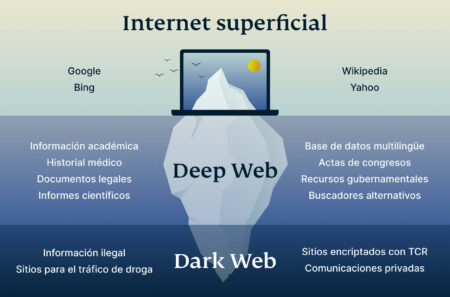
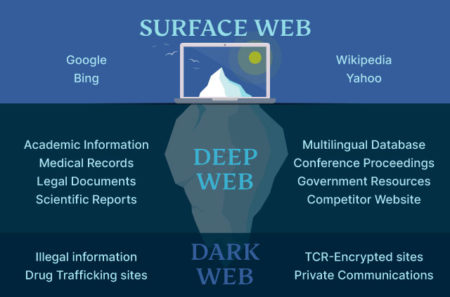
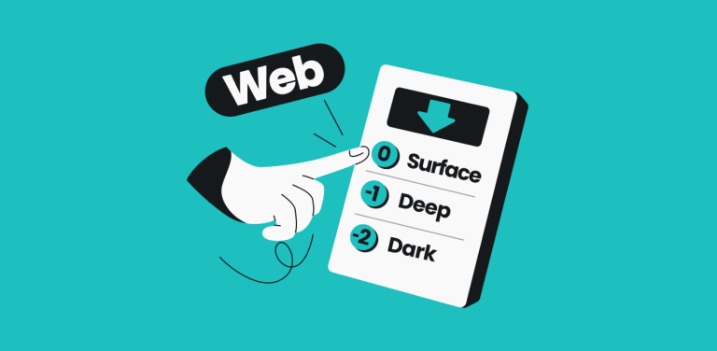
To access such a database, one must need specific tools and software, and would require a lot of precautions to access such data. Lastly, the “dark web” is a different category of the Internet and is sometimes confused as part of the deep web. It mainly hosts hidden websites that can’t be found on search engines and typical browsers can’t open. The site locations are encrypted onion links, and you need a special browser like Tor to access them. While the surface web is easily accessible through Google or other search engines, the Deep Web includes any content that requires special access. The Deep Web includes any online content that isn’t searchable through traditional search engines like Google or Bing.
By setting up the server correctly, hosts can even mask the location of their servers. Outlined below are the top five differences between the dark and deep web. On the internet, the deep web is not indexed by web crawlers, while the dark web is intentionally kept hidden. The person or group who has posted a webpage on the open web doesn’t care who has access to it or what can be done with it. To use a real-world example, you probably don’t care who in a large group knows your name or the color of your hair. Learn effective strategies for conducting threat hunting in your organization.
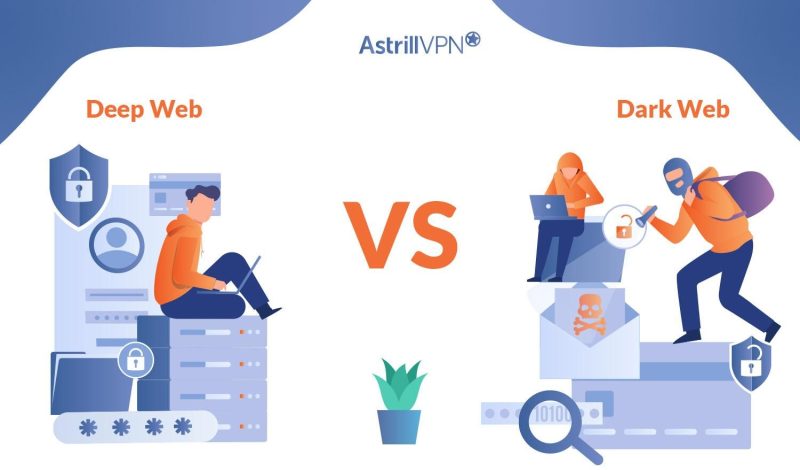
Deep Web Vs Dark Web: What Really Makes Them Different?
To access this, one must have a working Internet connection and will also require a search engine (such as Google, Bing, etc.) to access the content. There are “protected areas” in the deep web that most people don’t know about, such as sensitive government, military, and scientific databases. As mentioned, you’ll need a dedicated browser, such as The Onion Router (TOR). Hence, the nickname of “Onionland.” Most dark web websites use “.onion” as their top-level domain instead of .com, .edu, .biz, etc.
Tips To Stay Safe On The Dark Web
Understanding these differences, and implementing monitoring across both, is essential to building a Threat Exposure Management (TEM) program. That includes not only obscure forums and leak sites, but also widely used developer platforms like GitHub, which have increasingly become a source of risk for modern organizations. Sign up for your free account today and start protecting your external attack surface from potential threats. In terms of security, the deep web is generally not inherently dangerous, as it consists of legitimate, albeit hidden, content. Conversely, the dark web is rife with security risks, with users at a higher risk of encountering malware, scams, and law enforcement surveillance.
Risks In Accessing The Dark Web
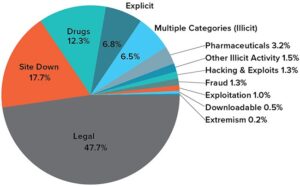
Helped by the launch of Bitcoin in 2009, the dark web quickly became a platform for criminals to source and deliver illegal items. Encountering or inadvertently engaging with this material can have serious legal and ethical repercussions, putting you at risk of legal action or psychological harm. Accessing the deep web doesn’t require a special browser or unique protocols. The dark web, however, can only be accessed through the Tor browser. The encrypted nature of the browser means everyone trying to access the dark web remains anonymous by default. What’s more, URLs on the dark web are starkly different from regular web addresses.
- The terms dark web and deep web are perceived to be linked with illegal and otherwise suspicious activity; however, a vast difference exists between the two.
- However, it’s important to stress that not all security actions on the dark web are legally safe or advisable from an ethical perspective.
- Tor powers them using its protocol known as Tor Hidden Service Protocol.
- One must always respect the laws and regulations regarding privacy.
- On the dark web, neither users nor web administrators reveal themselves to each other, including their identity or their location.
Dark Web Threats
By monitoring the dark web, security teams can gain information that will enable them to stay ahead of the threats. For instance, knowing if an organization’s data has been leaked can help security analysts change the relevant credentials and secure their systems before an attack occurs. Cyber threat intelligence (CTI) helps organizations predict, understand, and defend against cyber threats, enabling proactive protection and reducing the impact of attacks. The Dark Web is a segment of the Deep Web, which typically hosts illegal affairs, but not everything on it is illegal. Dark Web illegal activities can lead to severe legal actions, such as arrest, and so it must be taken very seriously by the users. You can also use the website’s search feature to locate content that web crawlers have not indexed.

Darknet Communications In 2025 – From IRC Forums To Telegram Crime Networks
Famous illegal marketplaces like the Silk Road are hosted on the Darknet. The Deep Web contains all the web sites that web crawlers cannot index. Examples of sites on the Deep Web that require a login to access include bank accounts, Netflix accounts, and social media accounts. Other content on the Deep Web include private files like medical records, legal documents, and sites that have blocked search engine crawlers.
Although most people use the Tor browser to access the dark web, it can also be used free of charge to gain privacy while surfing the normal indexed web (clear web/surface web). The benefit of using Tor to surf the regular internet is that your activities will be private. Thanks to a strong layer of encryption, your ISP cannot know which websites you’re visiting.
- Flare integrates into your security program in 30 minutes and often replaces several SaaS and open source tools.
- These “entry nodes” keep users anonymous while browsing dark web websites.
- Any content in this web area will be so horrible that many of those who witness it might be psychologically scarred for life.
- Here are some of the key differences between the deep and dark web.
- The contents of the deep web can be accessed by using a direct URL or IP address along with user account credentials.
Most internet users access the deep web almost every time they are online. It is tremendously more vast than the surface web, with some experts estimating that search engines index less than 1% of online content. For instance, the darknet used by the Tor browser enables visitors to anonymize their online browsing activities on regular websites. However, cybersecurity organizations could benefit from indirect participation in discussions regarding hacking and exploit trading that regularly takes place on the dark web.
It’s all the content on the sites you visit that is specific to you, or at least not available publicly to everyone with a browser. It’s often locked behind a user account or a password, which is why it can’t be found and indexed by search engines. In the same vein, corporations, government agencies and other organizations use the deep web to keep company and employee information safe and private. The dark web is a small portion of the deep web, which is the part of the internet that isn’t indexed by search engines. Unlike the deep web, the dark web is intentionally hidden and requires specialized software like The Onion Router (TOR) to access it. This ensures a high level of anonymity and privacy by encrypting users’ data and bouncing their internet traffic through a series of servers around the world.
In 2021, LinkedIn disclosed the exposure of 700 million user records. The data included phone numbers, email addresses, and other personally identifiable information – a gold mine for phishers. We would also advise consulting your legal team when writing dark web security policies.